
 Contact

キャプティブ 2026.02.01
CA 82 系統用蓄電池(BESS)専用総合保険プログラム
目次
- 1.W(ワット)
- 2.ジェームス・ワット
- 3.BESS(Battery Energy Storage System:系統用蓄電池)
- 4.BESS(Battery Energy Storage System:系統用蓄電池)が遭遇するリスク
- 5.市場における「BESS(系統用蓄電池)保険」の実態
- 6.GLC(グローバル・リンク)が独自開発:「BESS(系統用蓄電池)専用総合保険プログラム」
- 今回のまとめ
- 1.W (Watt)
- 2.James Watt
- 3.BESS (Battery Energy Storage System)
- 4.Risks Encountered by BESS (Battery Energy Storage System)
- 5.The Reality of “BESS (Battery Energy Storage System) Insurance” in the Market
- 6. GLC (Global Link) Independently Developed: ‘BESS (Battery Energy Storage System) Dedicated Insurance’
- Summary of this issue
Copyright © Shinichiro Hatani 2026 All rights reserved
For those who prefer to read this column in English, the Japanese text is followed by a British English translation, so please scroll down to the bottom of the Japanese text.
当時、世界最大と謳われた米国の保険会社のフィラデルフィア本社に在籍していた筆者にとって、1996年の「保険自由化(日本版ビッグバン)」の報はあまりに衝撃的であり、心を激しく揺さぶられた。
日本もようやく、自由に保険を開発・販売できる時代が来る。「日米での実務経験を持つ自分こそ、この変革期に貢献できるのでないか」。そう考え、起業への想いは日に日に強まっていった。採用してくれた素晴らしい会長や社長との別れは、さすがに後ろ髪を引かれる思いであったが、筆者は帰国を決断した。
帰国後の1997年春、幸運にも大手財閥系生命保険会社とのご縁をいただき、同社が設立した損害保険子会社の経営コンサルタントを委嘱された。通常、コンサルティング契約といえば半年や1年で終了するのが常である、しかし、役員や幹部の皆様より公私にわたり暖かいご厚誼をいただき、結果として13年もの長きにわたり任せていただくこととなった。
その間、毎年、ロイズ(Lloyd’s of London)を中心としたロンドン保険市場(ロンドン・マーケット)へ2ヶ月に1回、年6回ものペースで通い詰める機会にも恵まれた。この経験が、筆者を損害保険の深遠な世界へと導いてくれることになったのである。
その後、日本最大の共済団体、ならびに日本の歴史ある損害保険会社より、経営コンサルタントを委嘱されたが、2011年3月11日の東日本大震災発生時、津波で流失した多くの自動車が保険の補償対象外であるという現実に直面し、日本の損害保険制度の限界を痛感した。
「より広範な補償を可能にする保険は創れないものか」―そう模索していたその年の暮れ、東京で運命的な出会いがあった。
相手は、米国ハワイ州最大の日系損害保険会社で「キャプティブ・マネジメント部門」を創設した人物である。彼が熱く語る「日本のキャプティブの未来像」に耳を傾け、筆者が「実は、以前フィラデルフィアのCIGNA(シグナ)でESIS(キャプティブ部門)に所属していました」と明かすと、まるで旧知の仲のように一気に話しが進んだことを、今でも鮮明に覚えている。
ある日、彼から不意に一通のメールが届いた。「あなたの哲学に通じるものがある」というメッセージと共に次の言葉が記されていた。
“People don’t know what they want until you show it to them.” (人は形にして見せてもらうまで、自分は何が欲しいのかわからない)―Steve Jobs(スティーブ・ジョブズ)。

Steve Jobs(スティーブ・ジョブズ)
「まさにその通りだ、未だ世にない新しい価値を創造し、それを改良・展開して定着させるまでには、並外れたパワー(エネルギー)が必要となる」、そう思ったことをよく覚えている。
1.W(ワット)
このパワー(仕事率)の大きさを表す電気の単位が、「W(ワット)」である。一方、その電力を1時間使い続けた際の総量(消費電力量)は、「Wh(ワットアワー)」で表され、電気料金の計算基準として用いられる。
よく使われる単位は、1,000倍ごとに次のように表記される。
-
-
- 1,000W=1kW(キロワット)
- 100万W=1MW(メガワット)
- 10億W=1GW(ギガワット)
-
代表的な家電製品の最大消費電力の目安は次のようになる。
| 冷蔵庫(常時) 150-600W | 電子レンジ 1300W |
| ドライヤー 800-1200W | 掃除機 1200W |
| トースター(加熱時) 1000W | 炊飯器 300-700W |
| アイロン 1200W | 液晶テレビ(32型) 150W |
2.ジェームス・ワット
その電気の単位「W(ワット)」は、産業革命の立役者であるスコットランドの発明家、ジェームス・ワットの名前に由来している。
彼は電気の発明者ではないが、蒸気機関の改良を通じて「仕事率(パワー)」という概念を確立した。この功績により、彼の没後、その名が単位として採用されることになったのである。
19世紀末、電気が普及し始めた1889年の英国科学振興協会・第二回会議において、電気のパワー(電力)を表す単位としてジェームス・ワットの名を冠することが決まり、その後1960年の国際度量衡総会にて、正式に「世界の単位」として認定された。
ちなみに、自動車などで使われる「馬力(ホースパワー)」も、ワットが考案した言葉である。自ら改良した蒸気機関の性能を分かりやすく伝えるため、彼がこの単位を生み出したのである。
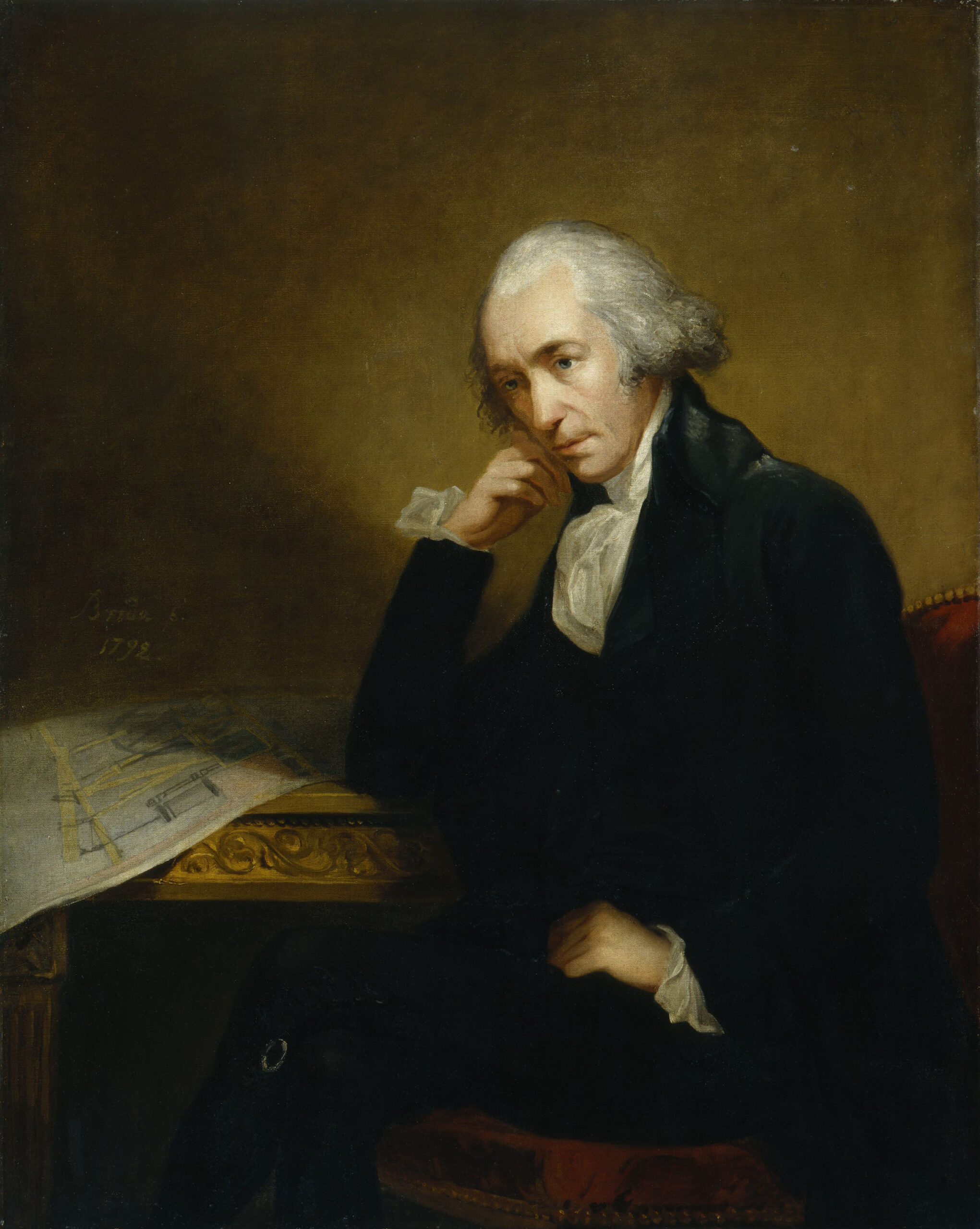
James Watt(ジェームス・ワット)
3.BESS(Battery Energy Storage System:系統用蓄電池)
近年、「系統用蓄電池」と呼ばれるビジネスが急速に活況を呈している。これは、発電所や送電線などの電力ネットワーク(系統)に直接接続される大規模な蓄電池のことである。再生可能エネルギーの普及を支え、電力の安定供給や需給調整を担う「次世代の重要インフラ」として、その役割は今後ますます拡大していくであろう。
その仕組みを簡単に言えば、災害対策として家庭にも普及し始めた「ポータブル電池(ポタ電)」の超巨大版と言えるものである。一般的なポタ電が1kW程度、家庭用蓄電池が5~10kW程度であるのに対し、系統用蓄電池は単位がMW(メガワット)、つまり、家庭用の数千倍から数万倍になたる「100万W(ワット)」単位のエネルギーを扱うものである。
実際の施設規模を見てみると、太陽光発電所などに併設される小規模なもの(2MW~10MW)でもコンテナ数個分。大手電力会社や発電事業者が電力需給の調整用として設置する中規模クラス(10MW~50MW)になれば、学校のプールやグラウンド一面にコンテナがずらりと並ぶような壮観な光景となる。さらに北海道や九州など、再生可能エネルギーが余剰となる地域で、送電線の混雑緩和を目的とした100MW(1億W)の巨大施設も登場している。世界的に見れば、さらに大規模なBESS (系統用蓄電池)の設置が加速しており、この分野はまさに拡大の一途を辿っている。
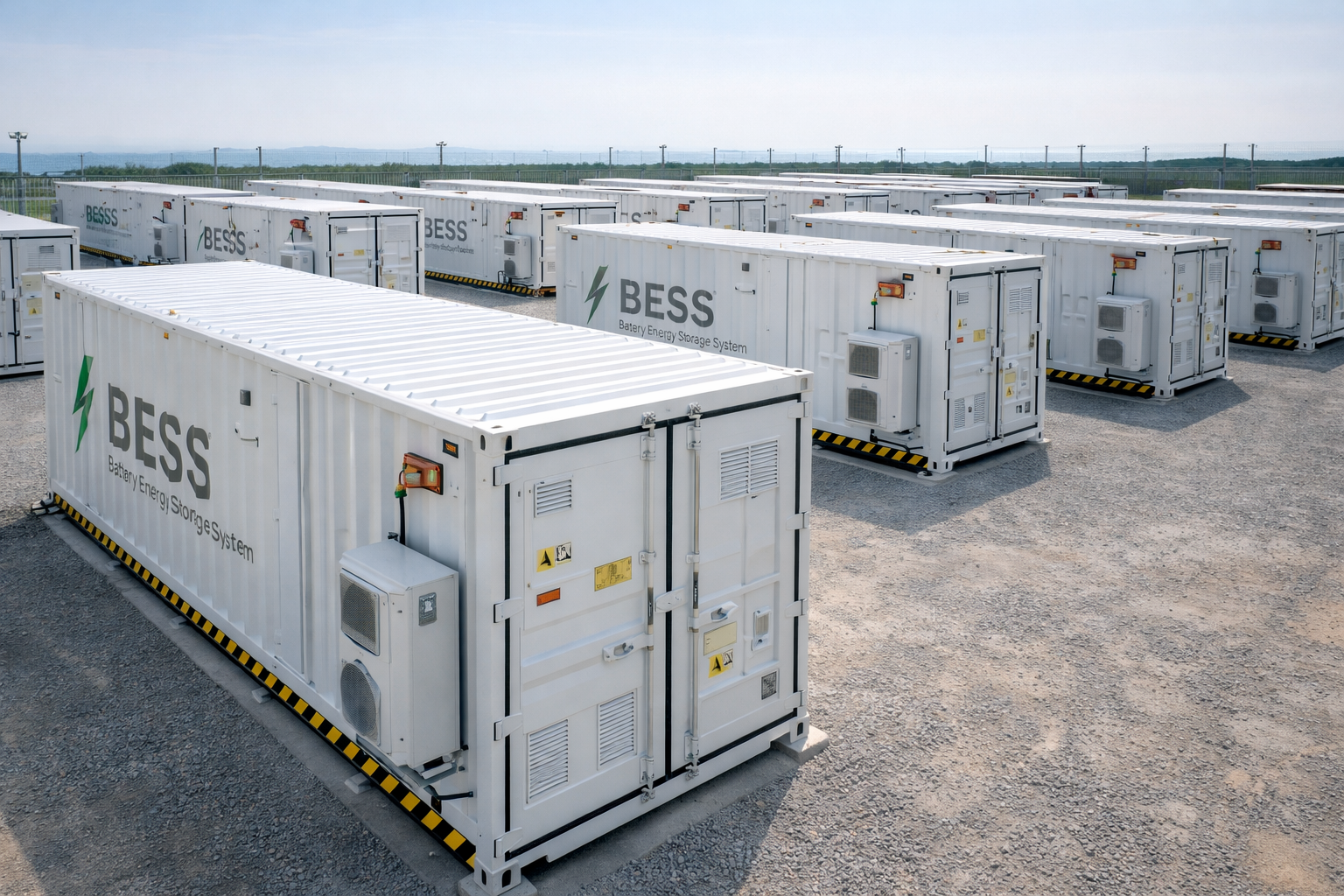
(多くのコンテナにBESS(系統用蓄電池)が収納され配置されている施設の例)
4.BESS(Battery Energy Storage System:系統用蓄電池)が遭遇するリスク
しかし、BESSの導入が加速する一方で、その「保険リスク」は驚くほど見過ごされている。設備の高額化、激甚化する自然災害、サイバー攻撃の脅威—リスクは年々高まっているにもかかわらず、採算性を優先するあまり「まさかの時」を想定していないケースが散見される。
考えてみてほしい。1kw程度の個人用ポータブル電池ですら、数万円~10万円は下らない。その1,000倍以上の規模を持ち、高度な機器が複雑に連携するBESS(系統用蓄電池)施設(2MW~10MW規模)となれば、導入費用は数億円、大規模な施設では数十億円を超える規模に達する。ひとたび火災や故障などのトラブルが起きれば、その経済的損失は計り知れない。
特に日本において避けて通れないのが「地震リスク」である。南海トラフや日本海溝沿いの巨大地震が懸念される中、「ハザードマップを確認したから安全」という理屈は通用しない。政府の地震調査研究推進本部さえも、「日本には無数の未発見断層が存在する」と認めている現実があるからである。
東日本大震災における福島第一原発の悲劇を思い出して欲しい。あの甚大な被害の主因は、「津波はこの程度しか来ない」という楽観的な想定に基づき、低い防波堤しか築かなかったことにある。この尊い教訓を活かすならば、我々がなすべきは「未発見・未想定のリスクさえもカバーするリスク・マネジメント(適切な保険への加入等)」に他ならない。
5.市場における「BESS(系統用蓄電池)保険」の実態
もちろん、万全の補償を手配している施設も存在するであろう。しかし、グローバル・リンクの調査で明らかになったのは、多くの系統用蓄電池施設における保険手配が、まことに「お粗末」で脆弱であるという現実であった。
□地震リスクの欠落:
ある施設では「動産総合保険」が手配されていた。損保関係者なら常識だが、この保険においては「地震リスクは免責」である。あまつさえ、わざわざ「地震危険不担保特約」が付帯されているケースさえ見受けられた。
□リスク認識と手配の矛盾:
WEB上では「BESSのリスク」として地震・津波やサイバー攻撃を列挙していながら、実際の手配ではそれらが全て免責という、「看板に偽りありの状態」も見られた。特に「動産総合保険」では、当然のように「サイバー・リスク免責」となっており、謳われているリスクのなかで、甚大な被害をもたらす可能性のあるリスクがことごとく免責となっているのである。
□機能しない事業中断保険(BI):
「事業中断保険(BI)」に加入している事例でも、そのトリガー(事故発生の引き金)は火災のみに限定されている。最も懸念すべき地震や津波による損壊については、肝心の地震保険が付帯されていないため、「地震による事業中断損害」は当然、免責である。
6.GLC(グローバル・リンク)が独自開発:「BESS(系統用蓄電池)専用総合保険プログラム」
□開発の背景:3.11の教訓とキャプティブの活用
2011年の東日本大震災。津波で流失した多くの車両が「保険の補償対象外」とされた現実に直面し、筆者は日本の保険制度の限界を痛感、「より広範な補償を可能にする仕組みを創りたい」―その一心でキャプティブの活用に着目し、2013年キャプティブの設立・運営管理のコンサルティング事業を開始した。
今回、我々が「BESS(系統用蓄電池)専用総合保険プログラム」を開発するにあたり、最も重視したのは「地震リスク」への対応(物的損害(PD)・事業中断損害(BI))を、このキャプティブを活用して実現することにあった。理由は明白である。
これまでの経験上、「日本で損害保険会社が提示する保険料よりも、ロンドン保険市場(世界最大級の再保険会社やロイズ)の保険料の方が圧倒的に廉価である」という事実を熟知していたからである。
□日本市場の課題:高額な保険料と限定的な補償:
本コラムでも度々触れてきたが、日本の損害保険会社(元受保険会社)のリスクの大半は、再保険を通じて、結局はロンドン保険市場(ロンドン・マーケット)へ移転されている。それにもかかわらず、ロンドン・マーケットの保険料は、日本の損害保険料の約3分の1程度というケースが多いという現実がある。
一方、BESS事業は採算性がシビアに問われる。そのため、火災保険の数倍から十数倍以上にもなる日本の地震保険料を忌避し、地震免責の「火災保険」や「動産総合保険」でお茶を濁す、「形だけのリスク・マネジメント」に陥りがちなことは否めない。
「地震保険料を適正化する手段=キャプティブ」。これが長年損保業界に身を置いてきた筆者の結論である。
また、価格だけでなく、補償範囲の問題もある。日本の損害保険会社は地震による「事業中断(BI)」の引受に消極的である。GLCがキャプティブ事業を開始した2013年当時はこれを引受ける損保は皆無であり、時を経るごとに改善は見られるものの、依然としてロンドン・マーケットの標準約款と比べれば補償内容は大きく見劣りする。特にBESSという未知のリスクに対しては、なおさら及び腰と言わざるを得ない。
□ロンドン・マーケットとの連携による新商品:
こうした状況を打破すべく、GLCは昨年8月よりロンドン・マーケットの世界最大級の再保険会社及びロイズ・シンジケートと開発に着手。頻繁なオンライン協議を重ね、ついに「BESS(系統用蓄電池)専用総合保険プログラム」を完成させた。
本商品は、施設の規模や特性合わせた「完全オーダーメイド」として提供され、以下の広範なリスクをカバーする。
-
-
- 地震保険(物的損害補償:PD)
- 地震保険(事業中断補償:BI)
- 火災保険
- サイバー保険
- 延長保証
-
今回のまとめ
産業革命のジェームス・ワットから続く「パワー(仕事率)」の歴史は、今やBESS(系統用蓄電池)という「10億W(ワット)級の巨大インフラ」へと進化を遂げている。しかし、どれほどテクノロジーが進化しても、日本列島に住む我々が「地震」という天災から逃れることはできない。
今回述べたとおり、現状のBESS市場における保険手配は、コストを優先するあまり、最も致命的な地震リスクやそれによる事業中断リスクが「免責(補償対象外)」となっているケースが散見される。これでは真のリスク・マネジメントとは言えない。
「人は形にして見せてもらうまで、自分は何が欲しいのかわからない」―スティーブ・ジョブズのこの言葉どおり、GLCはロンドン・マーケットと連携し、これまで日本市場になかったBESSのリスクを包括的にカバーする「BESS専用の総合保険プログラム」を形にすることができた。
この新しい選択肢が、日本のエネルギー産業を支える方々の「転ばぬ先の杖」となり、事業の安定的発展に寄与できることを確信している。
執筆・翻訳者:羽谷 信一郎
English Translation
Captive (CA) 82 – Comprehensive Insurance Programme for Battery Energy Storage Systems (BESS)
At the time, the author was working at the headquarters of what was then considered the world’s largest insurance company (in Philadelphia, USA), and the news of the 1996 “insurance liberalisation (Japan’s Big Bang)” shook me to the core.
Japan was finally entering an era where insurance could be freely developed and sold. ‘With my practical experience in both Japan and the US, surely I could contribute to this transformative period?’ This thought led to a growing desire to start my own business. Parting from the wonderful chairman and president who had hired me was truly bittersweet, but I resolved to return to Japan.
Upon returning in the spring of 1997, I was fortunate to secure an opportunity with a major zaibatsu-affiliated life insurance company, being commissioned as a management consultant for its newly established non-life insurance subsidiary. Typically, consulting contracts conclude within six months or a year. However, thanks to the warm personal and professional support extended by the directors and executives, I was ultimately entrusted with this role for a remarkable 13 years.
During this period, every year, I was also privileged to travel to the London insurance market (the London Market), centred around Lloyd’s of London, at a pace of six times a year, every two months. It was precisely this experience that guided me into the profound world of non-life insurance.
Subsequently, I was commissioned as a management consultant by Japan’s largest mutual aid organisation and a historic Japanese non-life insurance company. However, when the Great East Japan Earthquake struck on 11 March 2011, I was confronted with the reality that many vehicles swept away by the tsunami were not covered by insurance. This experience made me acutely aware of the limitations of Japan’s non-life insurance system.
‘Couldn’t we create insurance that enables broader coverage?’ – As I pondered this question towards the end of that year, a fateful encounter occurred in Tokyo.
The person I met was the founder of a ‘captive management division’ at the largest Japanese non-life insurance company in the US state of Hawaii. I vividly recall listening intently as he passionately described his ‘vision for the future of Japanese captives.’ When I revealed, ‘Actually, I previously worked in the ESIS (captive division) at CIGNA in Philadelphia,’ the conversation flowed instantly, as if we were old acquaintances.
One day, an unexpected email arrived from him. Alongside the message stating ‘I see parallels with your philosophy,’ the following words were written:
‘People don’t know what they want until you show it to them.’ – Steve Jobs.
Precisely. Creating new value that doesn’t yet exist in the world, then refining and expanding it until it becomes established, requires extraordinary power (energy).
1.W (Watt)
The unit representing the magnitude of this power (power rating) is the ‘Watt’ (W). Meanwhile, the total amount of electricity consumed when that power is used continuously for one hour is expressed in ‘Watt-hours’ (Wh), which serves as the basis for calculating electricity bills.
Commonly used units are denoted as follows, increasing by a factor of 1,000:
・ 1,000W = 1kW (kilowatt)
・ 1,000,000W = 1MW (megawatt)
・ 1,000,000,000W = 1GW (gigawatt)
The approximate maximum power consumption for typical household appliances is as follows:
Refrigerator (continuous) 150-600W
Microwave oven 1300W
Hair dryer 800–1200W
Vacuum cleaner 1200W
Toaster (when heating) 1000W
Rice cooker 300–700W
Iron 1200W
LCD television (32-inch) 150W
2.James Watt
The unit of electrical power, “Watt” (W), derives its name from James Watt, the Scottish inventor who was instrumental in the Industrial Revolution.
Although not the inventor of electricity, he established the concept of “power” through his improvements to the steam engine. In recognition of this achievement, his name was adopted as the unit of measurement after his death.
At the Second Congress of the British Association for the Advancement of Science in 1889, as electricity began to spread in the late 19th century, it was decided to name the unit representing electrical power after James Watt. Subsequently, at the General Conference on Weights and Measures in 1960, it was formally recognised as the ‘world unit’.
Incidentally, the term “horsepower” used in automobiles and similar applications was also coined by Watt. He devised this unit to clearly communicate the performance of the steam engine he had improved.
3.BESS (Battery Energy Storage System)
In recent years, the business known as “grid-connected batteries” has rapidly gained momentum. This refers to large-scale storage batteries directly connected to the power network (grid), such as power stations and transmission lines. As a ‘next-generation critical infrastructure’ supporting the expansion of renewable energy and ensuring stable power supply and demand balancing, its role is likely to grow significantly in the future.
Simply put, it can be described as a super-sized version of the ‘portable batteries’ (portable power units) that are beginning to gain traction in homes as disaster preparedness measures. Whereas typical portable batteries offer around 1kW and household storage units around 5-10kW, grid-scale storage operates in megawatts (MW) – handling energy on a scale of one million watts, representing thousands to tens of thousands of times the capacity of domestic units.
Observing actual facility scales, even smaller units (2MW to 10MW) at solar power plants occupy several containers. For medium-scale units (10MW to 50MW) installed by major power companies or generators for load balancing, the sight of containers lining an entire school swimming pool or sports field is truly spectacular. Furthermore, in regions like Hokkaido and Kyushu where renewable energy is in surplus, massive 100MW (100 million W) facilities have emerged, aimed at alleviating congestion on transmission lines. Globally, the installation of even larger BESS (grid-connected battery storage systems) is accelerating, marking a field that is expanding relentlessly.
4.Risks Encountered by BESS (Battery Energy Storage System)
While BESS adoption accelerates, its ‘insurance risk’ is surprisingly overlooked. Despite escalating risks—including rising equipment costs, increasingly severe natural disasters, and cyberattack threats—cases where ‘worst-case scenarios’ are neglected due to prioritising profitability are frequently observed.
Consider this: even a personal portable battery of around 1kW costs tens of thousands to hundreds of thousands of yen. For a BESS facility (grid-scale battery storage) of 2MW to 10MW scale—over 1,000 times larger and involving complex coordination of sophisticated equipment—the installation cost reaches hundreds of millions of yen. Should a fire or malfunction occur, the economic loss would be incalculable.
Particularly unavoidable in Japan is the “earthquake risk”. With concerns over massive earthquakes along the Nankai Trough and Japan Trench, the argument that “checking hazard maps guarantees safety” simply doesn’t hold water. The reality is that even the government’s Headquarters for Earthquake Research Promotion acknowledges that “countless undiscovered faults exist in Japan”.
Recall the tragedy at Fukushima Daiichi Nuclear Power Station during the Great East Japan Earthquake. The primary cause of that catastrophic damage was the construction of only low seawalls, based on the optimistic assumption that ‘tsunamis would only reach this height’. To apply this invaluable lesson, what we must do is implement risk management (appropriate insurance coverage) that safeguards against even undiscovered and unforeseen risks.
5.The Reality of “BESS (Battery Energy Storage System) Insurance” in the Market
Certainly, some facilities will have arranged comprehensive cover. However, Global Link’s investigation revealed the stark reality that insurance arrangements for many grid-connected battery storage facilities are truly inadequate and fragile.
① Absence of Earthquake Risk Coverage:
One facility had arranged “Comprehensive Movable Property Insurance”. As any property and casualty insurance professional knows, earthquake risk is typically excluded from such policies. Worse still, some policies even included a specific ‘earthquake risk exclusion clause’.
② Discrepancy between risk recognition and coverage:
While some websites list earthquakes, tsunamis, and cyberattacks as ‘BESS risks’, the actual policies often exclude all these risks – a case of ‘false advertising’. Particularly concerning is the ‘Cyber Risk Exclusion’ routinely included in ‘Comprehensive Movable Property Insurance’ policies. This means risks touted as covered—yet capable of causing catastrophic damage—are actually excluded.
③ Non-Functional Business Interruption (BI) Insurance:
Even in cases where ‘Business Interruption (BI) Insurance’ is taken out, its trigger (the event causing coverage) is often limited solely to fire. Crucially, damage from earthquakes and tsunamis – the most significant concerns – is naturally excluded as the essential earthquake insurance is not attached.
6. GLC (Global Link) Independently Developed: ‘BESS (Battery Energy Storage System) Dedicated Insurance’
□ Development Background: Lessons from 3.11 and Utilising Captives
The Great East Japan Earthquake of 2011. Confronted with the reality that many vehicles swept away by the tsunami were deemed ‘not covered by insurance’, the author keenly felt the limitations of Japan’s insurance system. ‘I want to create a mechanism enabling broader coverage’ – driven solely by this desire, the author focused on utilising captives, and the establishment and management of a captive in 2013 marked the beginning of everything.
In developing our ‘BESS (Battery Energy Storage System) Dedicated Insurance’ this time, our primary focus was on addressing earthquake risk (Property Damage (PD) and Business Interruption (BI)) through the use of a captive. The reason is clear. Based on our experience, we were well aware of the fact that premiums offered by the London insurance market (including some of the world’s largest reinsurers and Lloyd’s) are overwhelmingly cheaper than those presented by non-life insurers in Japan.
□Challenges in the Japanese Market: High Premiums and Limited Coverage
As frequently noted in this column, the majority of risks underwritten by Japanese non-life insurers (primary insurers) are ultimately transferred to the London insurance market (London Market) via reinsurance. Despite this, premiums in the London Market are often only about one-third of those charged by Japanese non-life insurers (primary insurers).
Meanwhile, the BESS business faces severe profitability pressures. Consequently, it is undeniable that insurers tend to avoid Japanese earthquake premiums – which can be several to over ten times higher than fire insurance premiums – resorting instead to “fire insurance” or “comprehensive movable property insurance” with earthquake exclusions, effectively engaging in “nominal risk management”. “The means to normalise earthquake premiums = a captive”. This is the conclusion reached by the author, who has spent many years in the industry.
Moreover, the issue extends beyond price to the scope of coverage. Japanese non-life insurers remain reluctant to underwrite “business interruption (BI)” losses caused by earthquakes. When GLC commenced its captive operations in 2013, such coverage was non-existent. While improvements have been seen over time, the level of compensation still pales significantly compared to standard London Market policies. Particularly regarding the unknown risk of BESS, one must acknowledge that insurers remain hesitant.
□New product developed in collaboration with the London market:
To overcome this situation, GLC commenced development last August with the world’s largest reinsurance companies and Lloyd’s syndicates in the London market. After frequent online consultations, they finally completed a ‘BESS (Battery Energy Storage System) dedicated insurance’ product.
This product is offered as a ‘fully bespoke’ solution tailored to the scale and characteristics of the facility, covering the following extensive risks:
-
-
- Earthquake insurance (Property Damage: PD)
- Earthquake insurance (Business Interruption: BI)
- Fire insurance
- Cyber insurance
- Extended warranty
-
Summary of this issue
The history of ‘power’ (work rate), continuing from James Watt of the Industrial Revolution, has now evolved into BESS (Battery Energy Storage System), a ‘gigawatt-scale mega-infrastructure’. However, no matter how much technology advances, we who live on the Japanese archipelago cannot escape the natural disaster of earthquakes.
As stated here, in the current BESS market, insurance arrangements often prioritise cost to such an extent that the most critical earthquake risks and business interruption risks are frequently ‘excluded (not covered)’. This cannot be considered true risk management.
‘People don’t know what they want until you show it to them’ – true to Steve Jobs’ words, GLC has collaborated with the London Market to create a ‘comprehensive insurance specifically for BESS’, previously unavailable in the Japanese market.
We are confident this new option will serve as a ‘precautionary measure’ for all those supporting Japan’s energy industry, contributing to the stable development of their businesses.
Author/translator: Shinichiro Hatani